
Instructions for Authors
The European Journal of Applied Economics submission guidelines and publication standards.
The European Journal of Applied Economics accepts two types of contributions:
- Original papers - (up to 8.000 words) report original research which must not have been previously published.
- Preliminary communications - (up to 3.000 words) report unpublished preliminary results of sufficient importance to demand rapid publication.
It is essential that authors write and prepare their manuscripts according to the instructions and specifications listed below. The contributors are strongly encouraged to read these instructions carefully before preparing a manuscript for submission, and to check the manuscript for conformance before submitting it for publication.
Instructions for authors
Manuscripts should be submitted using the Online Submission System ( Instructions for using the system ). The manuscript must be uploaded as a *.doc or *.docx file.
Manuscripts should be written in English (standard British English) with 1.15 spacing in A4 format leaving 2.5 cm for margins. The MS Word template is available here .
The authors are obliged to enclose a PDF document when uploading the manuscript - scanned Author Declaration Statement with the signatures of all authors.
Manuscript elements are the following:
- Title page with:
- title (and short title)
- name(s) of author(s)
- name and address of workplace(s) – affiliation(s)
- personal e-mail address(es)
- Abstract
- Keywords
- Introduction
- Literature review
- Methodology
- Results and Discussion
- Reference lists
Each of these elements is detailed below.
1. Title Page
1.1. Title (and short title)
We suggest the title should be relatively short but informative. If a long title is necessary, please prepare an optional short title.
1.2. Name(s) of author(s)
A list of all authors of the paper should be prepared. We need full first name and full last name. Initial(s) for middle name(s) is optional.
1.3. Name and address of workplace(s)- affiliation(s)
Authors' affiliations should be indicated in this section.
1.4. Corresponding author’s e-mail address
One e-mail address is needed. It will be used as the corresponding author's email address in all contacts with the authors.
2. Abstract
An abstract must accompany every article. It should be a brief summary of the significant items of the main paper. The abstract should give concise information about the content of the core idea of your paper. It should be informative and not only present the general scope of the paper, but also indicate the main results and conclusions. The abstract should not normally exceed 200 words. It should not contain literature citations or references to the tables or illustrations. All non-standard symbols and abbreviations should be defined. In combination with the title and keywords, the abstract is an indicator of the content of the paper. Authors should remember that online systems rely heavily on the content of titles and abstracts to identify articles in electronic bibliographic databases and search engines. They are therefore requested to take great care in preparing these elements.
3. Keywords
List of relevant keywords proposed by the authors, separated by commas. Up to 5 key terms can be selected.
4. Text
General rules for writing:
- use simple and declarative sentences, avoid long sentences, in which the meaning may be lost by complicated construction;
- be concise, avoid idle words;
- make your argumentation complete; use commonly understood terms; define all non-standard symbols and abbreviations when you introduce them;
- Latin words, as well as the names of species, should be in italic, as for example: i.e. or e.g.
- explain all acronyms and abbreviations when they first appear in the text.
Generally a standard scientific paper is divided into:
- introduction,
- main text,
- conclusion.
Tables and figures and/or schemes should be embedded in the manuscript, and appropriately numbered and labelled.
Tables
Authors should use tables to achieve concise presentation or where the information cannot be given satisfactorily in other ways. Tables should be prepared with the aid of the Word table function, without vertical lines. The minimum size of the font in the tables should be 10 pt. Tables should not be incorporated as graphical objects. Styles and fonts should match those in the main body of the article. Tables should be placed in the text and should be numbered consecutively using Arabic numbers and their position in the text should be indicated. Each table should have an explanatory caption which should be as concise as possible.
Figures
Authors may use line diagrams to illustrate theses from their text. The figures should be clear, easy to read and of good quality. Styles and fonts should match those in the main body of the article. Lettering and lines should be of uniform density and the lines unbroken. Axis labels should be in bold face. Units should be placed next to variables in parentheses. Figures should be placed in the text and should be numbered consecutively using Arabic numbers.
Mathematical equations should be embedded in the text. Complex equations should be prepared with the aid of the Word Equation editor.
All equations must be numbered using Arabic numbers consecutively in parenthesis at the end of the line, as presented:
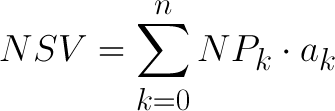 (1)
(1)Footnotes/Endnotes/Acknowledgements: Number of footnotes is limited to 5. Information concerning research grant support or the assistance of colleagues should appear in a separate Acknowledgements section at the end of the paper, not in a footnote.
5. Reference list
A complete reference should give the reader enough information to find the relevant article. The article should contain no fewer than 25 references, preferably published recently. Please pay attention to spelling, capitalization and punctuation here. All the references should be cited in the list of references and in the text. Completeness of references is the responsibility of the authors. Please avoid references to unpublished materials, private communication and web pages.
The original journal title is to be retained in the case of publications published in any language other than English (please denote the language in parenthesis after the reference in the Reference list).Citations in the text should follow the referencing style used by the American Psychological Association (Reference Examples: https://apastyle.apa.org/style- grammar-guidelines/references/examples).
- Book
- Book (one author) format:
Example:
Baxter, R. J. (2016). Exactly solved models in statistical mechanics. Elsevier. - Book (two or more authors) format:
Example:
Bodie, Z., Kane, A., & Marcus, A. J. (2015). Portfolio management. McGraw Hill/Learning Solutions. - Republished book, with editor
Example:
Watson, J. B., & Rayner, R. (2013). Conditioned emotional reactions: The case of Little Albert (D. Webb, Ed.). CreateSpace Independent Publishing Platform. http://a.co/06Se6Na (Original work published 1920) - Chapter in an edited book
Example:
Dillard, J. P. (2020). Currents in the study of persuasion. In M. B. Oliver, A. A. Raney, & J. Bryant (Eds.), Media effects: Advances in theory and research (4th ed., pp. 115–129). Routledge. - Conference presentation
Example:
Evans, A. C., Jr., Garbarino, J., Bocanegra, E., Kinscherff, R. T., & Márquez-Greene, N. (2019, August 8–11). Gun violence: An event on the power of community [Conference presentation]. APA 2019 Convention, Chicago, IL, United States. https://convention.apa.org/2019-video - Abstract of a conference presentation
Example:
Cacioppo, S. (2019, April 25–28). Evolutionary theory of social connections: Past, present, and future [Conference presentation abstract]. Ninety-ninth annual convention of the Western Psychological Association, Pasadena, CA, United States. https://westernpsych.org/wp-content/uploads/2019/04/WPA-Program-2019-Final-2.pdf - Conference proceedings published in a journal
Example:
Duckworth, A. L., Quirk, A., Gallop, R., Hoyle, R. H., Kelly, D. R., & Matthews, M. D. (2019). Cognitive and noncognitive predictors of success. Proceedings of the National Academy of Sciences, USA, 116(47), 23499–23504. https://doi.org/10.1073/pnas.1910510116 - Conference proceedings published as a whole book
Example:
Kushilevitz, E., & Malkin, T. (Eds.). (2016). Lecture notes in computer science: Vol. 9562. Theory of cryptography. Springer. https://doi.org/10.1007/978-3-662-49096-9 - Conference proceedings published as a book chapter
Example:
Bedenel, A.-L., Jourdan, L., & Biernacki, C. (2019). Probability estimation by an adapted genetic algorithm in web insurance. In R. Battiti, M. Brunato, I. Kotsireas, & P. Pardalos (Eds.), Lecture notes in computer science: Vol. 11353. Learning and intelligent optimization (pp. 225–240). Springer. https://doi.org/10.1007/978-3-030-05348-2_21 - Published Dissertation or Thesis References
Example:
Zambrano-Vazquez, L. (2016). The interaction of state and trait worry on response monitoring in those with worry and obsessive-compulsive symptoms [Doctoral dissertation, University of Arizona]. UA Campus Repository. https://repository.arizona.edu/handle/10150/620615
- Book (one author) format:
- Article
- Journal Article
Example:
Gajić, J. (2012). Importance of marketing mix in higher education institutions. The European Journal of Applied Economics, 9(1), 29-41. - Monograph as Part of a Journal Issue
Example:
Ganster, D. C., Schaubroeck, J., Sime, W. E., & Mayes, B. T. (1991). The nomological validity of the Type A personality among employed adults [Monograph]. Journal of Applied Psychology, 76(1), 143–168. http://doi.org/10.1037/0021-9010.76.1.143
- Journal Article
- Other formats
- Web page on a Website References
Example:
Bologna, C. (2019, October 31). Why some people with anxiety love watching horror movies. HuffPost. https://www.huffpost.com/entry/anxiety-love-watching-horror-movies_l_5d277587e4b02a5a5d57b59e - Report by a Government Agency References
Example:
Taking time: Support for people with cancer (NIH Publication No. 18-2059). U.S. Department of Health and Human Services, National Institutes of Health. https://www.cancer.gov/publications/patient-education/takingtime.pdf - Dataset References
Example:
O’Donohue, W. (2017). Content analysis of undergraduate psychology textbooks (ICPSR 21600; Version V1) [Data set]. ICPSR. https://doi.org/10.3886/ICPSR36966.v1 - Whole Website References
Example:
We created our survey using Qualtrics (https://www.qualtrics.com).
- Web page on a Website References
If you have any questions, do not hesitate to contact the Managing Editor at tkalicanin@singidunum.ac.rs.
Editorial policy
Manuscripts preferred for publication are those:
- Original papers or review articles - any text copied from previous publications will not be accepted. Figures and Tables from previous publications could be used in certain amount with obligatory citations;
- Focused on the core aims and scope of the journal;
- Correctly written in English - they should be clearly-written, grammatically-correct, properly-punctuated, in an easily readable style;
- Delivered in electronic format.
Manuscripts should be submitted via an online submission system.
Submission of a manuscript indicates that the paper is not actively under consideration for publication in other journals. By submitting the manuscript, the authors agree that upon its acceptance for publication, all exclusive copyrights of the paper are transferred to the publisher, Singidunum University.
Authors are asked to make their manuscript comply with instructions (see Instructions for Authors). Although the European Journal of Applied Economics can provide limited technical support, it is the author's responsibility to deliver a properly formatted electronic version of the manuscript. The corresponding author is responsible for informing the co-authors of the manuscript status throughout the submission, review and production process.
The Editor in Chief evaluates the quality and the potential impact of the work and reserves the right to make the final decision with respect to publication. The submission may be declined without review, if deemed inappropriate for reasons other than scientific merit (work incomplete, inconclusive, merely confirmatory and of insufficient originality).
Every article published in The European Journal of Applied Economics has been through double blind peer review; its quality, validity, and relevance is assessed by independent peers within the relevant field. All manuscripts are reviewed by a minimum of three peer reviewers and, in addition to that, by the English language editor. The reviewers will attempt to provide constructive criticism to assist the authors in ultimately improving their work.
When the revision of a manuscript is requested, authors should return the revised version of their manuscript as soon as possible within 60 days. In case of the second revision, authors need to return their revised manuscript within 20 days. If these deadlines are not met, and no specific arrangements for completion have been made with the Managing Editor, the manuscript will be treated as a new one and will receive a new identification code along with a new registration date. The authors are also expected to fully address the reviewer's suggestions in a separate Word file named Response to reviewers. The Managing Editor only communicates the final decision and informs the authors about further processing.
Manuscripts, accepted for publication, are published online and may appear on the Website 1-2 months prior to regular print publication. Once a manuscript appears on the Website, it is considered as published.
A PDF offprint copies of the online published article will be provided free of charge to the corresponding author, and may be viewed, printed, or stored, if it is for the author's own use. Besides this, all authors from universities other than the Singidunum University can receive, upon request, printed version of the Journal which contains their article, free of charge.
Publication of colour images is not available, so all images should be greyscale.
Publication Ethics and Malpractice Statement
Authors` responsibilities
Authors submitting works to The European Journal of Applied Economics do so on the understanding that their paper/piece of work is original. Underlying data should be represented in a clear and unambiguous form. A paper should contain sufficient detail and references to permit others to replicate the work. Fraudulent or knowingly inaccurate statements constitute unethical behaviour and are unacceptable.
All research studies using empirical data need to be made reproducible before being accepted for publication with EJAE, which means that the raw data (including panel data sets, time series, data collected through questionnaires or interviews, etc.) need to be made publicly available using the MendeleyData (https://data.mendeley.com/) repository in the form of .xlsx or .cvs files.
An active link to the MendeleyData page (see the following example: https://data.mendeley.com/datasets/kwsrxshf9x/1), containing complete raw data used in the study and clear instructions on how to reproduce the results presented in the study, needs to be provided in the Methodology section.
The Methodology section must also present methods used in the study in a step-by-step fashion and in enough detail (including software used for statistical analysis) to allow other researchers to reproduce the results presented in the study and build on them.
Because our journal is making a major shift toward publishing exclusively reproducible research, these are strict requirements. Failure to meet these requirements may be grounds for rejection.
The authors should ensure that they have written entirely original works, and if the authors have used the work and/or words of others that this has been appropriately cited or quoted and permission has been obtained where necessary.
Proper acknowledgment of the work of others must always be given. Authors should cite publications that have influenced the reported work. Information obtained privately, as in conversation, correspondence, or discussion with third parties, must not be used or reported without explicit, written permission from the source.
Plagiarism in all its forms constitutes unethical behaviour and is unacceptable. Journal editors and readers have a right to expect that submitted work is the author's own, that it has not been plagiarized (i.e. taken from other authors without permission, if permission is required) and that copyright has not been breached (for example, if figures or tables are reproduced).
An author should not in general publish manuscripts describing essentially the same research in more than one journal of primary publication. Submitting the same manuscript to more than one journal concurrently constitutes unethical behaviour and is unacceptable.
In general, an author should not submit for consideration in another journal a paper that has been published previously, except in the form of an abstract or as part of a published lecture or academic thesis or as an electronic prepublication at specialized prepublication websites.
Information obtained in the course of confidential services, such as refereeing manuscripts or grant applications, must not be used without the explicit written permission of the author of the work involved in these services.
In multi-authored papers, it is important that all authors that have made a significant contribution to the paper are listed. Those who have provided support but have not contributed to the research (e.g. language editing or medical writing), should be acknowledged in an Acknowledgments section.
All authors should disclose in their manuscript any financial and personal relationships with other people or organizations that could be viewed as inappropriately influencing (bias) their work.
Funding for any type of publication, for example, by a commercial company, charity or government department, should be stated within the publication. This applies to all types of papers (including, for example, research papers, review papers, letters, editorials, commentaries). The role of the research funder, as well as the role of all parties contributing to the research and publication, in designing the research, recruiting investigators/authors, collecting the data, analyzing the data, preparing the manuscript or controlling publication decisions should be stated in the publication, unless this is obvious from the list of authors/contributors. Other sources of support for publications should be clearly identified in the manuscript, usually in an acknowledgment. Transparency is a key standard to be adhered to.
When an author discovers a significant error or inaccuracy in their own published work, it is the author’s obligation to promptly notify the journal editor or publisher and cooperate with the editor to retract or correct the paper if deemed necessary by the editor. If the editor or the publisher learn from a third party that a published work contains an error, it is the obligation of the author to cooperate with the editor, including providing evidence to the editor where requested.
Policy on the Use of Generative AI and AI-Assisted Technologies
The European Journal of Applied Economics acknowledges the role of generative AI and AI-assisted technologies in enhancing research efficiency, literature synthesis, and linguistic precision. However, to uphold the rigorous standards of scholarly integrity, authors must comply with the following institutional requirements:
Human Oversight and Scholarly Responsibility
AI-assisted technologies must function strictly as supplementary tools and cannot serve as a substitute for human expertise, critical analysis, or scientific evaluation. Authors maintain exclusive accountability for the entirety of the submitted work. This responsibility includes:
- Verification of Empirical Accuracy: Ensuring the rigorous validation of all AI-generated outputs, specifically regarding the authenticity of citations and the prevention of fabricated bibliographic data.
- Scientific Validity: Mitigating the risks of factual inaccuracies, technical distortions, or systemic biases that may be inherent in automated content generation.
- Originality and Interpretation: Guaranteeing that the final manuscript reflects the authors' own intellectual synthesis, original insights, and authentic analytical contributions.
Prohibition of AI Authorship
Authorship entails legal, ethical, and professional obligations—including the capacity to approve the final manuscript and ensure its integrity—which are uniquely human attributes. Consequently, AI tools shall not be listed or cited as authors or co-authors.
Transparency and Disclosure Requirements
Transparency is a cornerstone of the peer-review process and the maintenance of academic trust.
- Methodological Transparency: If AI technologies were integral to the research design or data processing (e.g., algorithmic modeling or advanced data analytics), such use must be comprehensively documented within the Methods section to ensure reproducibility.
- Exemptions: Standard tools for orthographic, grammatical, and punctuation verification do not require formal disclosure.
Data Confidentiality and Intellectual Property Rights
Authors must ensure that the application of AI tools does not infringe upon third-party intellectual property or compromise the confidentiality of unpublished research data. It is the authors' obligation to verify that the terms of service of any AI platform utilized do not grant the service provider rights to the submitted material or impose restrictions on the manuscript’s subsequent publication.
Reviewers` responsibilities
Peer review is the main mechanism for assessing the quality of submitted articles. The reviewers have the following responsibilities:
- To review the manuscript objectively, in a timely manner.
- To protect the confidentiality of any information supplied by the editor or author.
- To warn the editor about any submitted content that is considerably similar to the reviewed manuscript.
- To warn the editor about any potential conflicts of interest between the reviewer and author.
Publisher`s responsibilities
Singidunum University shall ensure that good practice is maintained to the standards outlined above.
Editors`responsibilities
Editors have the following responsibilities (among others):
- To act in an objective and fair way while performing their duties, without discrimination on grounds of gender, sexual orientation, religious or political beliefs, ethnic or geographical origin of the authors.
- To follow reasonable procedures in case of complaints regarding ethical standards.
- To give authors a reasonable opportunity to respond to any complaints. All complaints should be investigated no matter when the original publication was approved, or who the author is.
- To pursue cases of suspected misconduct even in submissions they do not intend to publish.
- To publish corrections, clarifications, retractions and apologies when needed.
Dealing with unethical behaviour
The general principle confirming misconduct is intention to cause others to regard as true that which is not true. Deception may be by intention, by reckless disregard of possible consequences, or by negligence.
Publisher and editors shall take reasonable steps to identify and prevent the publication of papers where research misconduct has occurred, including plagiarism, citation manipulation, and data falsification/fabrication, among others.
Misconduct and unethical behaviour may be identified and brought to the attention of the editor and publisher at any time, by anyone. Whoever informs the editor or publisher of such conduct should provide sufficient information and evidence in order for an investigation to be initiated. Evidence will be gathered, while avoiding spreading any allegations beyond those who need to know.
Editors can take the following steps to deal with misconduct and unethical behaviour:
- Informing the author or reviewer about a misunderstanding or misapplication of ethical standards. It may include a warning related to future behaviour.
- Publication of a formal notice or an editorial detailing the misconduct.
- A formal letter to the head of the author's or reviewer`s department or funding agency.
- Formal retraction of a publication from the journal.
- Formally banning future contributions from the author(s).
- Reporting the case and outcome to a professional organisation or higher authority for further investigation and action.
The body in charge of dealing with misconduct allegations is the Ethics Committee. Links to email address: mkostic@singidunum.ac.rs .
Handling complaints
When the complaint is made against our author, the journal editor shall contact the author about whom a complaint has been made, and the author will be given the opportunity to respond/comment. The decision shall be made based on the author’s response. The remedies (these are not exclusive) may include: publication of a notice in a future issue, formal retraction of the article, publication of an editorial concerning the ethical issues raised and the journal’s decision concerning the issues, editor’s decision on future submissions by the author(s)
Paper retraction
Journal editors shall consider retracting a paper if:
- There is clear evidence that the findings are unreliable, either as a result of misconduct (e.g. data fabrication) or honest error (e.g. miscalculation or experimental error);
- The findings have previously been published elsewhere without proper cross-referencing, permission or justification (i.e. cases of redundant publication);
- It constitutes plagiarism;
- It reports unethical research.
Announcements about retraction shall be published as soon as possible, to minimise damaging effects of misleading publications. Retracted articles shall be clearly identified as such in all electronic sources. Editors are responsible for ensuring that retractions are labelled in such a way that they are identified by bibliographic databases (which should also include a link to the retracted article). The retraction shall appear on all electronic searches for the retracted publication.